Most AI software deployed today is designed around a short-lived chatbot model. An employee types a prompt, the AI generates a single response, and the session ends. The next time someone opens the tool, the AI has forgotten the project context, business rules, and previous work.
When designing Seepient, I set out to build something more valuable for growing businesses: an AI Person.
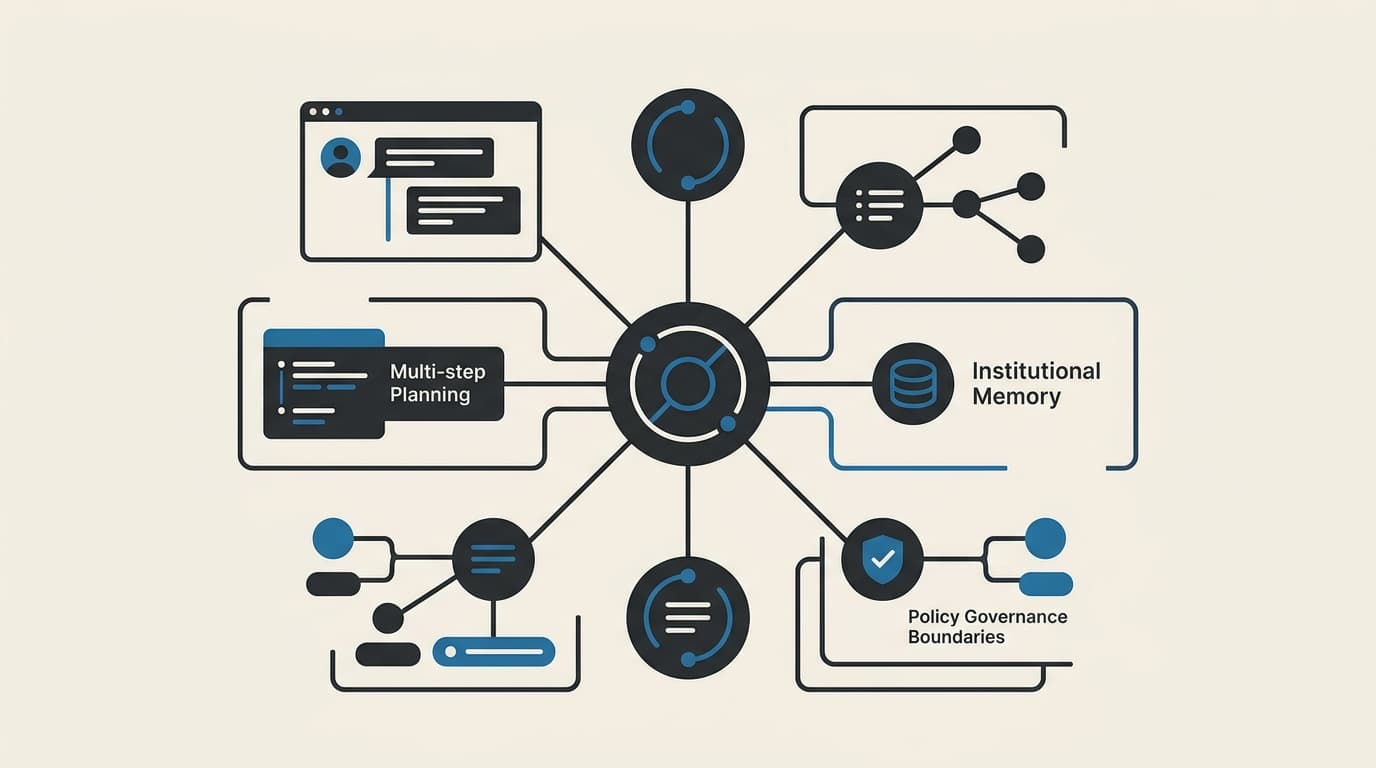
An AI Person isn't an ephemeral Q&A widget. It is a persistent digital colleague designed to plan multi-step initiatives, retain institutional memory across sessions, obey custom governance policies, and execute technical work safely.
This build log outlines the strategic architectural choices behind Seepient, why I prioritized headless execution over visual screen-clicking, and how my single engine scales from an individual workstation to a cloud platform for teams.
What an AI Person delivers to a growing team
To move beyond basic text generation and deliver real operational ROI, an AI system must fulfill four core capabilities:
- Autonomous Initiative. Instead of requiring step-by-step human handholding, an AI Person accepts high-level business objectives, such as "audit our server configuration and patch security vulnerabilities", and formulates the necessary steps, tool selections, and execution plans independently.
- Durable Memory & Context. Re-explaining processes to software burns valuable team hours. Seepient maintains persistent, tamper-evident memory stores that retain approved project permissions and historical decisions across system restarts.
- Custom Policy Governance. Unconstrained AI introduces operational risk. Seepient evaluates every intended action against business policy rules before executing any system change.
- Deterministic System Execution. An AI Person must interact directly and reliably with business infrastructure, cloud environments, and data pipelines.
Why headless automation beats visual screen-clicking
A common trend in AI demos is visual browser automation, where an AI "sees" screens and clicks visual buttons. While visually appealing, screen-clicking software is unsuitable for mission-critical business operations:
- Visual layouts are fragile. Minor UI updates, screen resolution changes, or web page redesigns cause visual AI tools to break unpredictably, creating constant maintenance overhead.
- Real work runs in headless environments. Production business systems, cloud servers, and data pipelines run in headless environments without graphical interfaces. A visual AI is blind in the very environments where production operations happen.
- High latency and zero auditability. Processing video streams and screenshots inflates computing costs and makes auditing action side effects nearly impossible.
Seepient operates using a headless, command-driven model. Instead of clicking visual buttons, it communicates directly with operating systems through structured, secure protocols:
- System commands run inside isolated operating system sandboxes.
- Code and file updates stream through precise, line-anchored patch engines.
- Operational actions execute through standardized, typed capability interfaces.
This guarantees 99.9% execution determinism whether Seepient is running on a developer's workstation or inside a cloud server cluster.
One engine, flexible deployment for teams
Growing businesses shouldn't have to maintain separate codebases for desktop utility tools and centralized cloud services. Seepient uses a single core engine that works across deployment models:
| Operational Mode | User Interface | Security & Execution Boundary | Business Use Case |
|---|---|---|---|
| Workstation Mode | Interactive Terminal Dashboard | Local OS-Level Process Sandbox | Individual developer productivity, local automation, private tasks |
| Cloud Team Mode | Secure Web API & WebSockets | Multi-Tenant Isolated Worker Containers | Centralized team workflows, automated background services, cloud infrastructure |
Because the core reasoning and security engine is decoupled from presentation layers, your business can deploy Seepient locally today and scale it into a cloud platform for your team tomorrow without rewriting a single line of business logic.
Strategic takeaway
An AI Person isn't a demo. It's a secure, highly capable digital colleague that works alongside your staff and gets more effective over time.
In my next build log (Foundational Architecture), I explore the modular six-layer architecture that protects Seepient from technical debt and guarantees long term maintainability.
If your team wants custom AI and automations built for your specific business problems, Book a call and let's discuss how to structure your deployment safely.