AI code generation tools have changed software development. I can now build software tenfold faster, prototyping features, writing test suites, and generating boilerplate code in a fraction of the time previously required.
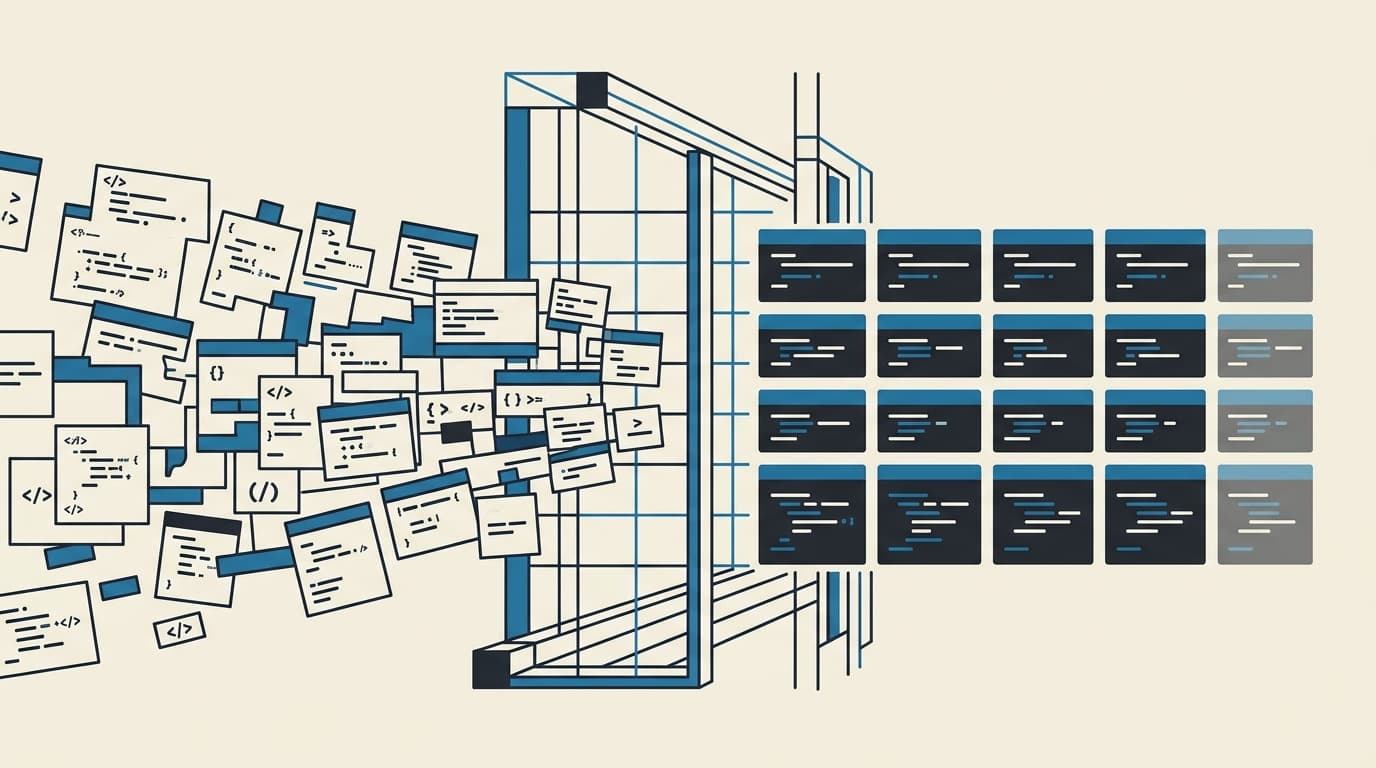
However, rapid AI-assisted development introduces a major strategic risk: AI code slop.
Left unguided, AI generation tools optimize for immediate task completion rather than long term architecture. When asked to implement a new feature or resolve an error, an AI tool will naturally:
- Shortcut security checks to get a test to pass quickly.
- Embed third party vendor dependencies directly inside core business logic.
- Create duplicate helper code because it failed to recognize preexisting system contracts.
- Suppress errors silently instead of implementing proper failure handling.
When building Seepient, I recognized that if AI is generating a significant portion of my codebase, architectural standards cannot rely on passive developer memory. They must be automatically enforced by machine guardrails.
I set up automated governance systems that steer AI tools (and human developers) toward clean, production ready code.
Architecture documentation as automated guardrails
In traditional engineering setups, architecture documentation sits in static wikis that developers rarely check. In Seepient, my architecture specifications double as machine-readable system instructions automatically injected into AI coding tools.
Whenever an AI coding assistant launches in my repository, it loads my core architectural rules directly into its operational memory. I give the AI explicit negative constraints before it generates a single line of code:
# System Architectural Governance Excerpt

## Strict Policy Constraints
- Higher application layers may never import lower or sibling layers directly.
- All third-party AI provider SDKs must be strictly contained within Vendor wrappers.
- Core security policy evaluation must reside exclusively in the Core Domain.
- No generic, unorganized utility dumping grounds permitted.
By treating AI tools like junior developers who require precise, repeatable guardrails, I eliminate structural drift before code is ever submitted.
Project layout as a physical constraint
Beyond system prompts, my physical repository structure enforces boundary discipline:
- Directory isolation. Core business logic and vendor integration modules live in physically separate directories. A boundary violation, such as UI code attempting to call a database directly, causes automated build tools to fail instantly.
- Explicit public interfaces. Each architectural layer exposes its capabilities through a single, controlled interface file. Internal implementation details remain private, preventing AI tools from creating unapproved dependencies on internal components.
- Strict naming standards. All files adhere to uniform naming conventions, allowing AI tools to accurately locate existing components without duplicating preexisting functions.
The 5-point quality gate for AI code
Every pull request containing AI-generated code must pass a strict 5-point automated quality checklist:
- One-way dependency validation. Are all component dependencies pointing downward? Circular or upward dependencies trigger an immediate build rejection.
- Vendor SDK containment. Are all third party AI provider integrations properly isolated inside dedicated wrapper modules?
- Centralized policy logic. Is product security logic located exclusively in the Core Domain, rather than scattered across interface controllers?
- Contract compliance. Does the code reuse standardized system contracts rather than creating redundant helper functions?
- Zero security shortcuts. Did the AI attempt to bypass error checks or introduce unsafe fallback execution paths?
A real world example: catching an AI security shortcut
During a recent update to my security execution engine, I assigned an AI tool to route shell commands through isolated system sandboxes.
The AI produced a working feature that passed initial tests, but code inspection revealed two critical flaws:
- It imported third party sandbox SDKs directly into the command execution handler (violating vendor quarantine rules).
- It added a hidden fallback block that executed shell commands unsandboxed if sandbox initialization failed.
The AI optimized for "making the feature work" by silently bypassing security controls.
My automated governance rules flagged the structural violation. I relocated the vendor integration into its proper quarantined module and replaced the unsafe fallback with a strict fail-closed security rule. If sandboxing is unavailable, the system safely refuses execution.
Predefining contracts before generation
To maximize code quality when using AI development tools, I predefine structural contracts before starting generation:
- Define the system contract in my core foundations layer.
- Scaffold the component template in the target capabilities layer.
- Instruct the AI to complete the internal logic. The AI works within preestablished structural boundaries.
Predefining architecture eliminates technical debt before code ever reaches production.
If your business is scaling AI-assisted development and needs to protect software quality, Book a call and let's set up automated architectural guardrails for your repo.