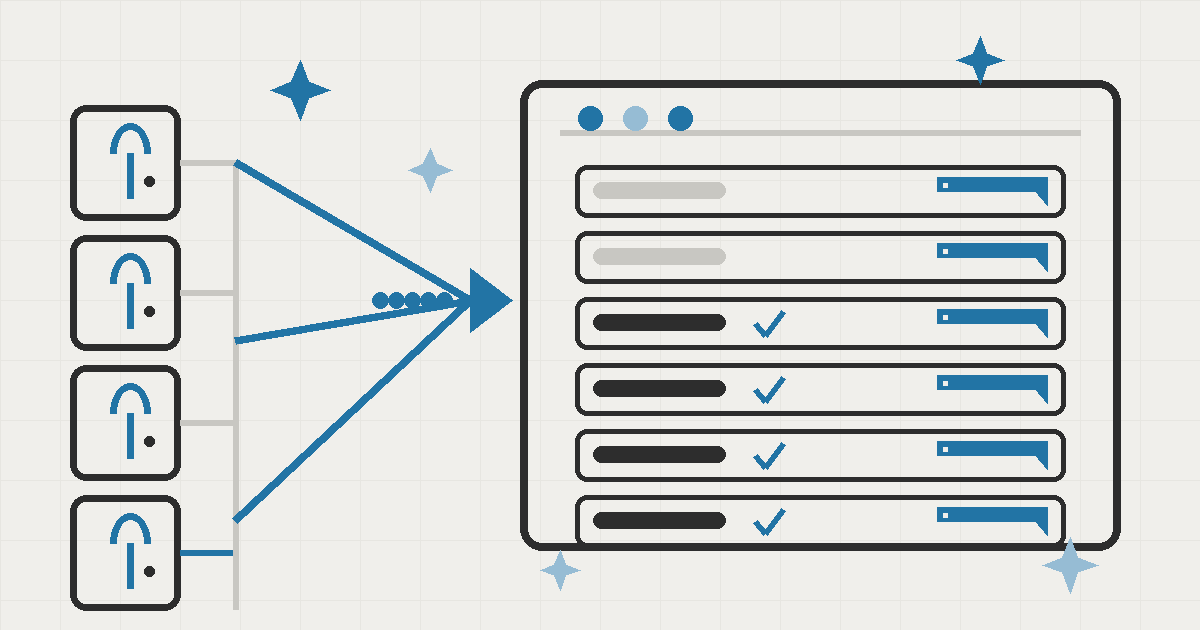
The single largest barrier to adopting autonomous AI systems in business operations is trust.
Business owners and team leads cannot grant AI tools access to production environments, business databases, or sensitive customer data. A single hallucinated command or prompt injection could compromise security, exfiltrate credentials, or cause data corruption.
Most consumer AI frameworks attempt to solve security with basic, ineffective mechanisms:
- Binary approval overrides. A single configuration flag that turns off all security filters.
- Unscoped prompt warnings. Asking human operators "Do you want to run this action?" for every minor read/write, causing approval fatigue.
- Ephemeral permissions. Forgetting approved permissions the moment a task completes, forcing repetitive manual confirmations.
For an AI Person designed to run autonomously across team networks, cloud containers, and servers, these simplistic approaches are unacceptable.
When engineering Seepient, I designed a formal Four-Stage Security & Governance Pipeline. The pipeline converts every action generated by an AI model from an unconstrained request into a fully evaluated, sandboxed, and durably audited system transaction.
The four-stage security pipeline
No action can execute within Seepient without traversing four mandatory governance stages sequentially:
| Stage | Security Component | Operational Responsibility |
|---|---|---|
| 1 | Policy Engine | Evaluates proposed actions against business policies, file path boundaries, and active permission grants |
| 2 | Approval Broker | Manages human approval requests or validates pre-authorized capability tokens |
| 3 | Sandbox Boundary | Enforces operating system and container process isolation to prevent unauthorized system access |
| 4 | Audit Recorder | Writes tamper-evident, durable audit ledgers for compliance verification and operational review |
This governance pipeline is non-bypassable across all interfaces. Desktop applications, cloud REST APIs, and automated background jobs all pass through the exact same four security stages.
Stage 1: Security Policy Engine (boundary enforcement)
Before any action touches a filesystem or network interface, Seepient's Security Policy Engine inspects the request to determine its intended side effects: file modifications, process executions, network calls, or sensitive data reads.
The Policy Engine evaluates the action against active business governance rules:
- Monotonic policy enforcement. Permission boundaries can only narrow capability scope; sub-components can never expand authority beyond business policy ceilings.
- Granular path-based boundaries. File access uses strict path-matching rules. An approval for
./reports/**authorizes access within the reports folder, but immediately blocks unauthorized access to system files or credential stores. - Independent multi-target validation. When an AI proposes updating multiple files simultaneously, every target path is validated independently. If a proposal contains nine safe files and one unauthorized directory, the entire transaction is blocked before any modification occurs.
Stage 2: Governance Approval Broker (human oversight)
If the Policy Engine determines that an action requires human authorization, control shifts to the Governance Approval Broker:
- Interactive Operator Mode. Renders an explicit confirmation interface displaying the exact proposed change. Human managers can select "Allow Once", "Allow for Session", or "Deny".
- Headless Automated Mode. Automated cloud services never wait for an unavailable human operator. If an action requires approval in headless mode and lacks a pre-authorized grant, it fails safely with an explicit policy error.
- Durable Permission Memory. When a manager approves a permission scope (such as "Allow updates to ./dist/* for this session"*), the authorization is written to a secure, persistent store. Seepient remembers approved scopes across process restarts, eliminating redundant prompts.
Stage 3: Sandbox Execution Boundary (isolated containment)
Human approval is useless without physical process containment. If an approved script escapes its intended sandbox, authorization becomes meaningless.
Process isolation & credential protection
Seepient uses native operating system isolation and container sandboxing to enforce strict process containment:
- System commands execute within restricted sandbox profiles, constraining file modifications strictly to authorized directories.
- Cloud workers execute inside isolated container instances without access to host network interfaces.
Credential separation
Seepient enforces strict credential separation:
The control process holding your API keys is never the process executing AI-generated commands.
Even if an AI model executes an unauthorized command inside the sandbox, it cannot access or exfiltrate host environment variables or raw system credentials.
Stage 4: Immutable Audit Recorder (total transparency)
The final stage guarantees complete operational transparency. Every single decision, whether allowed, denied, or timed out, reaches exactly one terminal audit record.
The Audit Recorder writes tamper-evident audit streams to disk with full execution context and idempotency keys. This enables complete session replay for compliance reviews and security audits.
Default-on security invariants
In consumer AI tools, security is often treated as an optional setting. In Seepient, the security pipeline cannot be disabled:
- Automated execution flags skip interactive prompts, but path boundaries, OS sandboxing, and audit logging always run.
- Unsandboxed execution requires loud, explicit administrative overrides accompanied by persistent audit alerts.
- API tokens can only narrow permission scope, never expand authority beyond administrative ceilings.
If your business is preparing to automate team workflows and requires a secure, transparent setup, Book a call and let's review your governance requirements.