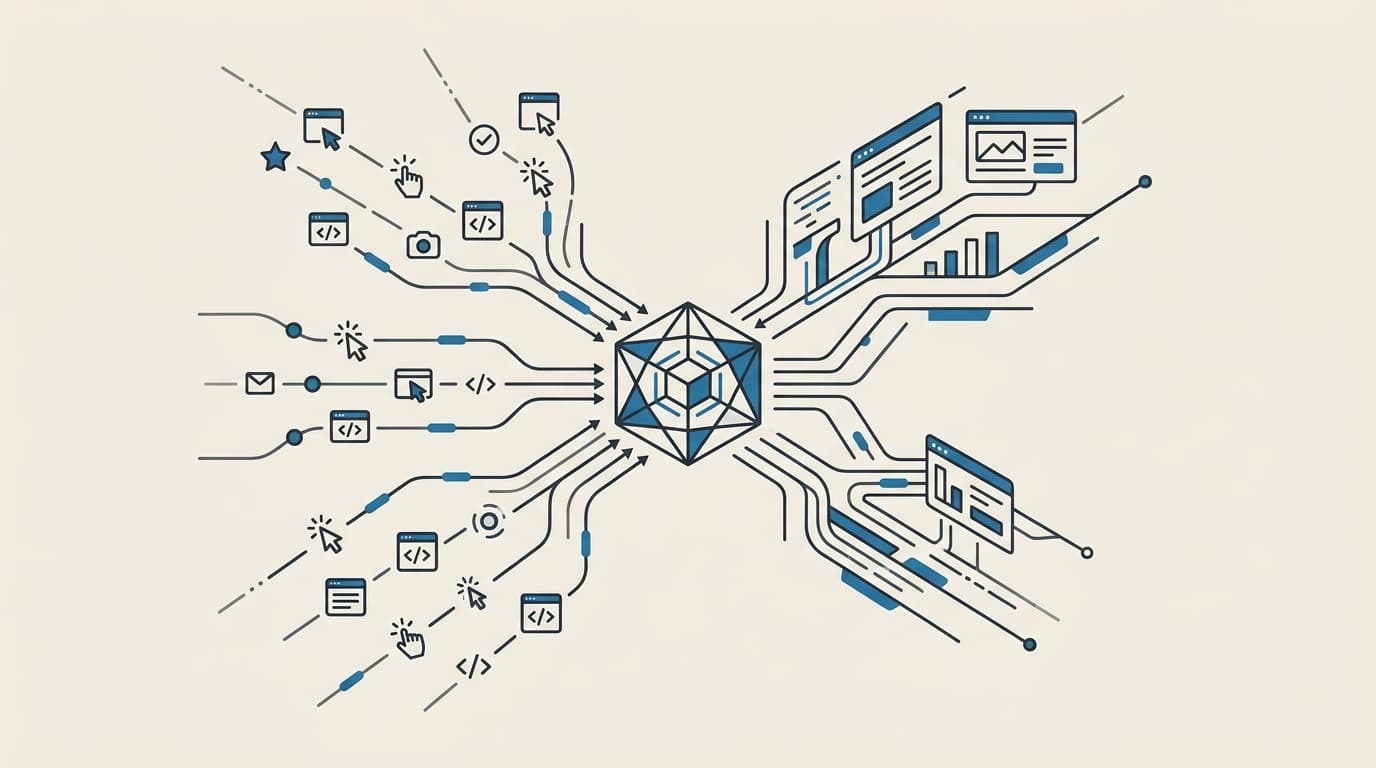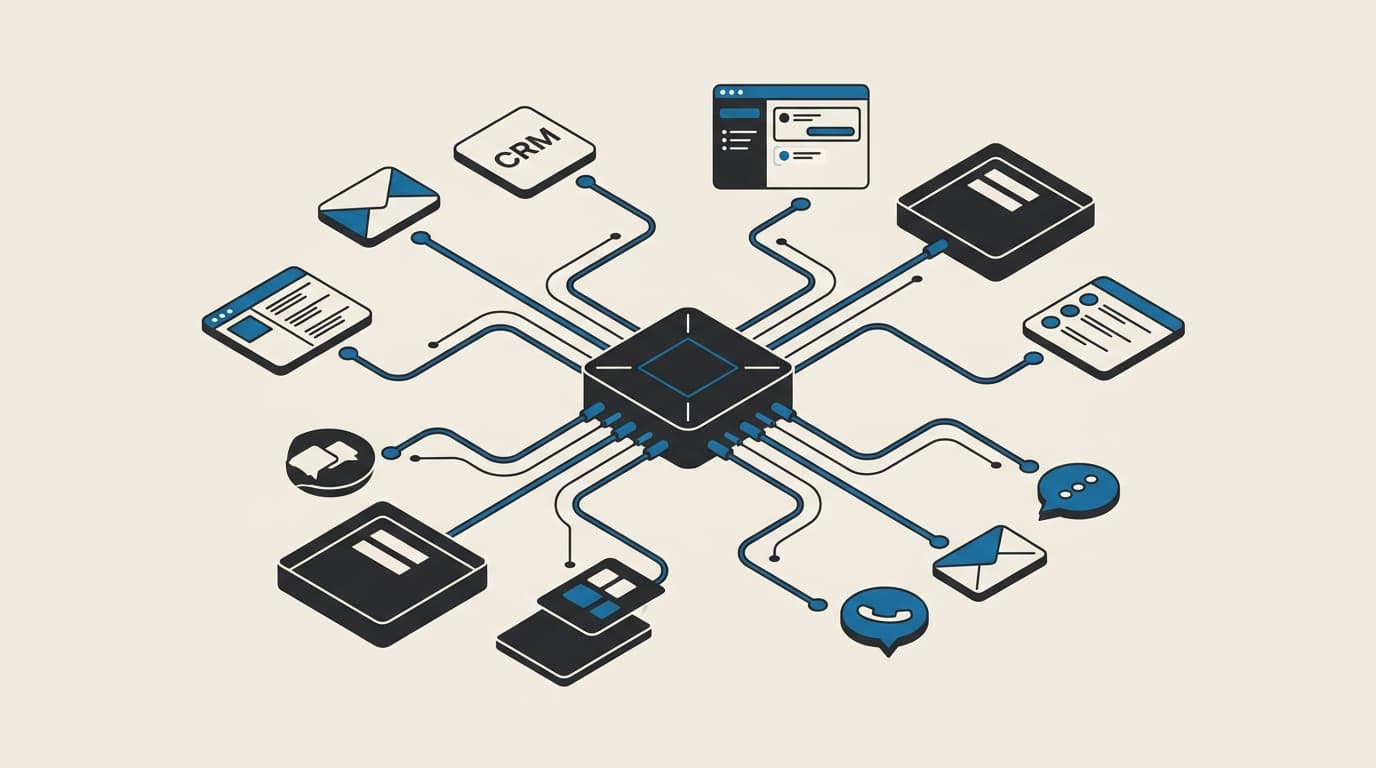
When teams evaluate AI coding assistants today, they are usually buying an appliance.
Think of Claude Code, Cursor, or GitHub Copilot as a microwave. You unbox the unit, plug it in, and press start. Inside that metal casing, everything is permanently wired together: the language model, the planning logic, the tools that edit your files, the safety checks, and the conversation history. It works out of the box, but if you want to swap the heating element for an induction coil or change how the door latches, you cannot. You take the entire box as delivered, or you walk away.
DeepSeek Harness (dsh) takes the exact opposite approach. Rather than handing you a sealed appliance, it gives you a modular workstation built entirely from interchangeable parts.
The whole design reduces to a simple formula:
Agent = Model (The Brain) + Harness (The Body & Tools)
Understand this distinction and you'll see where production AI is heading. Modularity matters far more to your business bottom line than raw model intelligence alone.
The core idea: "Everything is a plugin"
In conventional software, a "plugin" is a minor add-on around the edges, like adding an ad-blocker extension to your browser. The browser remains the massive, privileged core, and the plugin only touches what it is permitted to touch.
DeepSeek Harness flips this model upside down. Built on an underlying plugin engine called Cordis, the system has no privileged core application at all.
The Lego baseplate analogy
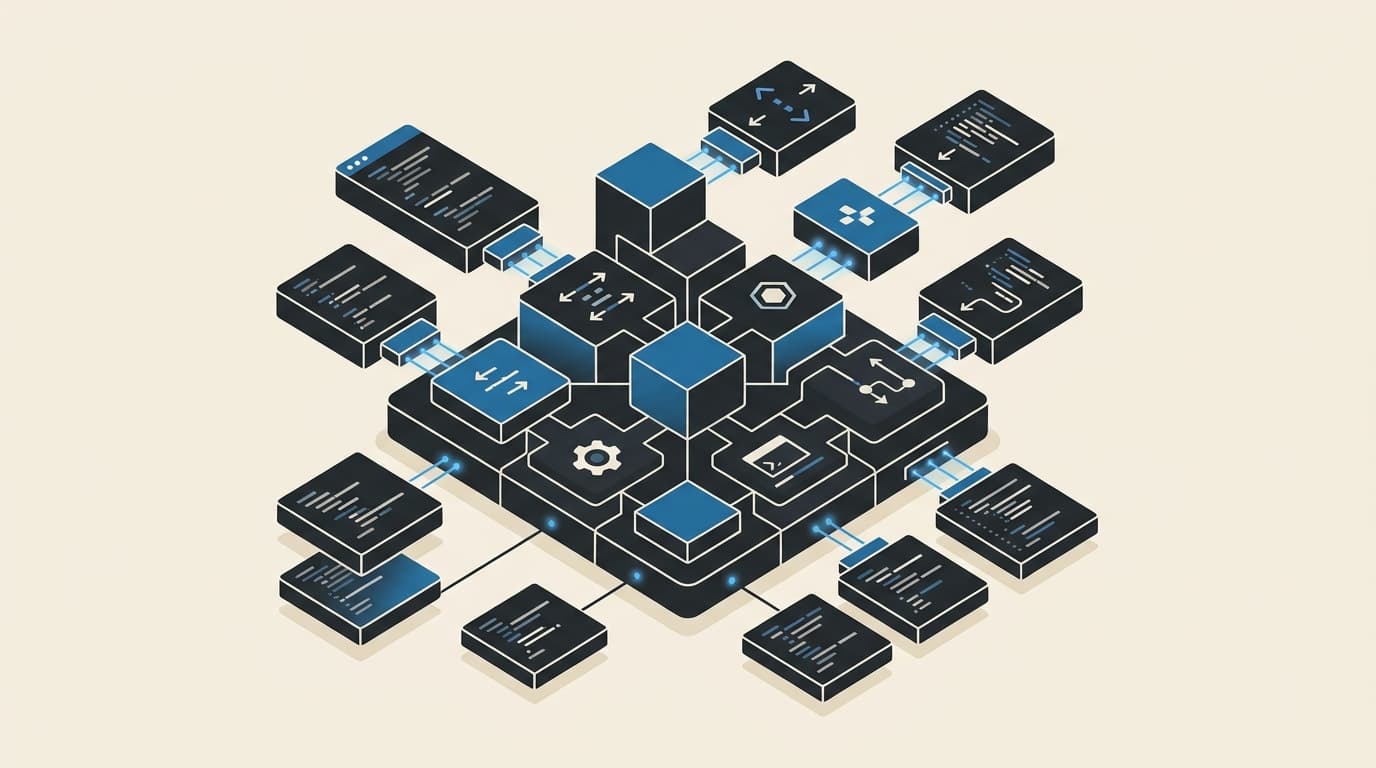
Think of DeepSeek Harness as an empty Lego baseplate:
- The baseplate itself does almost nothing on its own. It is simply a standardized surface with connection points.
- Every single capability is an individual Lego block:
- Talking to an AI model is a plugin.
- Reading and modifying files is a plugin.
- Asking for human approval before running a command is a plugin.
- The user interface (terminal vs. web dashboard) is a plugin.
- Long-term memory and project history are plugins.
- The planning loop (how the AI decides what to do next) is a plugin.
Because every component connects using the exact same standard, no single piece is indispensable. You can pop off any block and click a different one into its place without rebuilding the rest of the machine.
How it works in practice: configuration as assembly
Instead of writing hundreds of lines of glue code or wrestling with locked vendor ecosystems, you configure an AI agent by picking a "recipe" of plugins that match your exact operational needs.
1. Daily speed vs. high governance
A solo builder working on a fast prototype wants frictionless speed. They activate a lightweight terminal interface, local file editing tools, and an auto-approval plugin for safe read actions powered by an ultra-efficient model like DeepSeek V4-Flash, Gemini 3.7 Flash, or GPT 5.6 Luna.
A growing company dealing with customer data or production infrastructure needs strict boundaries. Without changing the core tool, they swap in an isolated container sandbox plugin, an immutable audit logging plugin, and a team web dashboard running against a verified frontier reasoning model like Sonnet 5, Opus 5, or GPT 5.6 Sol. The agent behaves according to the exact security policy required, without maintaining two separate codebases.
2. Plug-and-play swappability
Because components are decoupled, you can upgrade each layer on its own schedule:
- Switch the Brain: Move between DeepSeek V4, Sonnet 5, Gemini 3.7 Flash, GPT 5.6 Terra, GLM-5.3, or local open-weights models running on your own hardware in seconds. Your custom file tools, safety rules, and memory stay completely untouched.
- Switch the Body (Environment): Run code directly on your local workstation for speed, or execute commands inside a secure container in the cloud just by switching the execution plugin.
- Switch the Experience: Kick off a long-running batch migration from your terminal before leaving your desk, and monitor progress or review diffs via a browser dashboard plugin running concurrently.
3. Meta-agents: nesting specialized tools
Because external tools and agents are treated as standard plugins, DeepSeek Harness can wrap other existing AI tools (such as Claude Code or Codex) as specialized sub-agents.
An orchestration agent can plan high-level project milestones, delegate specific coding tasks to a dedicated sub-agent plugin, and verify the resulting output before presenting it for human sign-off.
Why modularity matters for business operations
When business owners and technical leads ask me why they should care about harness architecture rather than just waiting for the next frontier model, I point them to four operational advantages:
| The Old "Appliance" Trap | The Modular Harness Advantage |
|---|---|
| Vendor Lock-in: Changing your user interface or security model requires migrating your entire team to a new platform. | Zero Lock-in: Swap only the model or the security plugin while keeping all existing team workflows intact. |
| Fragile Customization: Adding company-specific compliance rules requires maintaining a private, brittle fork of an open-source project. | Clean Extensions: Drop in custom audit, memory, or approval plugins cleanly through standard interfaces. |
| Hard to Benchmark: Impossible to tell if an assistant is effective because of the underlying model or the prompt harness around it. | Fair Testing: Keep the exact same toolset, prompt rules, and environment, then test multiple models head-to-head. |
| Rigid Security: All-or-nothing permission prompts that either interrupt you every second or grant full system access. | Granular Control: Approval rules are an independent, tunable layer tailored to your risk tolerance. |
The model is a swappable component. The operational harness around it is your real asset.
From fixed products to adaptable platforms
Over the past year, the industry focused almost entirely on the race between foundational models: who had the highest benchmark score, who offered the largest context window, and who dropped the cheapest API tokens.
Those improvements are welcome, but in day-to-day business operations, raw intelligence hits a wall if the surrounding tool is inflexible. When an AI tool cannot adapt to your team's security requirements, cannot connect to your internal systems, or locks you into a single model vendor, its practical utility drops sharply.
DeepSeek Harness points toward the next step in AI tooling: transforming coding assistants from inflexible appliances into adaptable platforms. By treating the model as the brain and everything else as interchangeable body parts, teams gain full ownership over how their automation thinks, acts, and evolves.
If you are evaluating how to build modular, safe AI agent workflows into your company's daily operations, book a call and let's map out the right architecture for your team.