Four billion tokens a month, given away for free, and most businesses can't use any of it.
That's the odd situation AI has drifted into. Every serious model maker offers a free tier. Groq, Google, Mistral, NVIDIA, Cerebras, and more each hand out a real bucket of free work: a few million tokens here, a few thousand requests a day there. Tokens are the chunks of text an AI model reads and writes, and stacking all those buckets together makes the math interesting. Roughly four billion tokens of free AI capacity every month, waiting behind a pile of sign-up forms.
The problem was never the supply. It's the plumbing.
Free, the way a parking lot is free
Every provider hands you a separate key, a separate dashboard, a separate set of limits, and a slightly different way of talking to it. Fine when you're testing one model. A headache the moment you try to get real work done.
I watch this happen whenever someone starts experimenting with AI assistants. A tool works beautifully for an hour, and then the provider's free limit kicks in mid-task. The assistant just stops. Whoever's using it has to stop too. Dig up another key, switch models, edit a config file, and hope the next bucket lasts longer.
The tokens were free. Managing the free tokens was the tax.
One door, every provider
I came across FreeLLMAPI recently and read through the repo. It's open
source on GitHub, MIT licensed,
with nearly 19,000 stars. It does something simple in theory and genuinely
useful in practice. It stacks all your free provider keys behind one door.
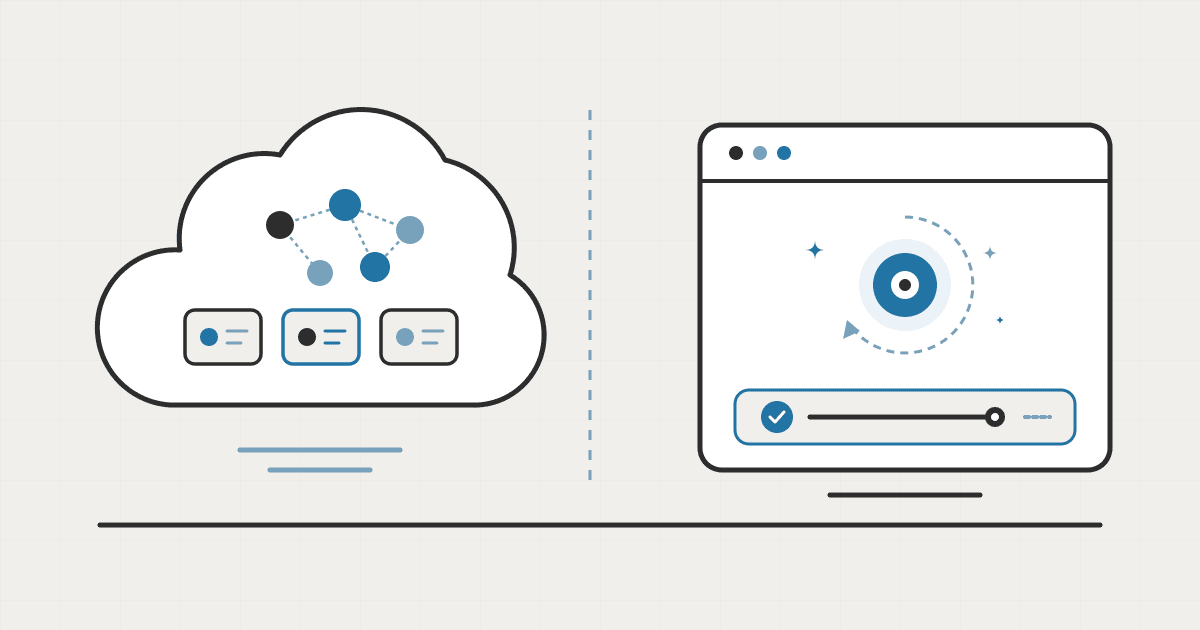
Your AI tools point at that single door: coding assistants like Cursor or Claude Code, custom scripts, anything that speaks the standard OpenAI-style API that most AI software already uses. They never need to know which provider is actually answering.
Behind the door, a router watches everything you've connected. Which providers are healthy, how much of each free quota you've burned, which model is the best one still available. When one provider hits its limit, the next request quietly goes to another. Your work doesn't die halfway through. It just keeps moving.
Two details matter to me. First, your keys stay on your own machine, encrypted. You're not handing credentials to a hosted middleman. The pooling happens where you run it. Second, the model catalog updates itself. Free models appear and vanish constantly; the router learns about the changes on its own, instead of you hand-editing configuration every week.
One tiny free tier is a toy. Dozens of them together are a real pile of work.
Where this shines
For an individual, this is genuinely useful. Four places where it earns its keep:
- Prototyping. Test an app idea or a chatbot for weeks with no software bill at all.
- Learning. Play with AI assistants, side projects, and experiments. The stuff you'd never justify spending on.
- Parallel experiments. Run several AI agents at once without watching a paid meter spin.
- Anywhere cost beats speed. If an answer taking two extra seconds is fine, free capacity is fine.
That last point is the whole philosophy: workloads where cost matters more than perfectly consistent performance.
Where it doesn't shine
Honesty time. The same thing that makes free tiers useful makes them unreliable. Provider quotas change without notice. Models get retired. Quality and speed vary from hour to hour. And you're not getting the best models available, either. You're getting the best free model at that moment, and the best free model is rarely the top of the line. If your workflow needs high-end, high-quality output, this will frustrate you.
It's not a business tool either. If you're running a team, a production workload, or anything with customers on the other end, this is not your foundation. The project's own documentation says the same thing. It's built for personal experimentation and learning, not for production. A task that depends on a specific model answering every single time, or a hiccup that means a customer-visible outage, has no place on free capacity. Free capacity is for proving ideas. Paid capacity is for running them.
The model that answers today might not exist next month. Plan for that.
The honest comparison
FreeLLMAPI isn't the only way to route AI requests, and it's worth knowing
exactly what it is and isn't:
| FreeLLMAPI | OpenRouter | LiteLLM | |
|---|---|---|---|
| What it does | Pools your own free keys behind one door | One hosted marketplace of many models | A full gateway you configure and run |
| Where capacity comes from | Your own free-tier accounts | Their platform's inventory | Whatever you connect |
| Best for | Near-zero-cost personal experimentation | Simple access to lots of models | Serious multi-provider setups with people to maintain them |
FreeLLMAPI is deliberately narrow. It's not trying to be a universal
gateway. It's free-tier maximization. Take the keys you already have, turn
them into useful capacity, and stop babysitting quotas. That's the whole job,
and it does it well.
What this is actually for
This is a tool for individuals. Students on a budget, people learning the craft, anyone building side projects just to see what sticks. If that's you, it's one of the best free things I've seen.
If you're a business owner, read the same words as a warning. Free capacity is a way to explore, not a way to run. The day an experiment proves itself, when it's saving hours and you want it dependable every single day, that's the moment to move it onto paid capacity you can rely on. That's exactly the kind of work I help with. Book a call and we'll sort out what's worth experimenting with, and what's worth committing to.